
BackPack Light: 15 Smart Hacks
I still remember my first big trip. I showed up at the airport with a backpack so enormous I could barely lift it onto the scale. The airline agent raised an eyebrow. The scale showed 23 kilograms—well over the limit. I paid a hefty fee, dragged that monster through security, and spent the next three months regretting every unnecessary item I had stuffed inside.
That was years ago. Since then, I’ve completely overhauled how I pack. I’ve experimented with different bags, tested countless packing strategies, and learned through experience what actually earns its place in my luggage.
These days, I travel with a single carry-on backpack that weighs around seven kilograms. I never check bags. I never pay overweight fees. And honestly? I never feel like I’m missing anything.
If you’re tired of hauling heavy suitcases or paying extra at the airport, this guide is for you. I’ll walk you through exactly how I backpack, what I bring, and—just as importantly—what I leave behind.
The Mindset That Changed Everything
Before we talk about specific items, let’s talk about mindset. Because packing light starts in your head, not in your suitcase.
Early on, I packed out of fear. Early on, I packed out of fear. Fear that I’d need something and not have it. Worry about looking out of place. Anxiety about being uncomfortable. So I packed backups for my backups. I packed for every possible scenario.
Eventually, I realized something that changed everything: almost anything you need can be bought at your destination.
Forgot a toothbrush? Every corner store has one. Need an extra sweater? Local shops exist for a reason. Unless you’re heading to a remote jungle or a tiny island with no stores, you’re never truly stranded.
Now, before I backpack, I ask myself one question: Will I actually use this enough to justify carrying it?
If the answer isn’t a clear yes, the item stays home.
Pick the Right Bag
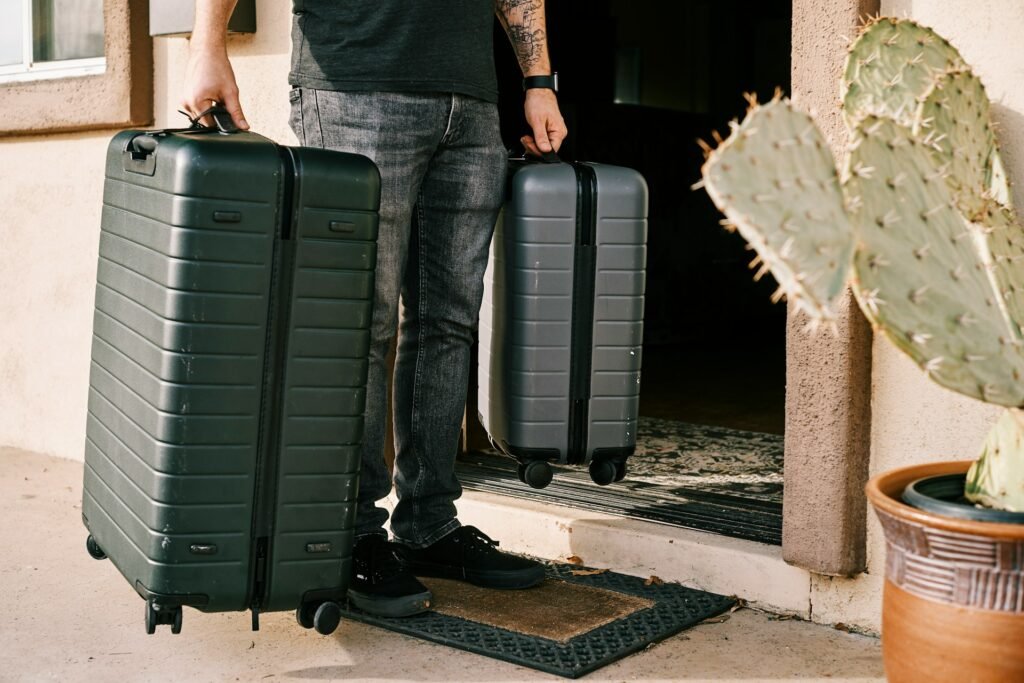
Your bag sets the foundation for everything. Get this wrong, and packing light becomes an uphill battle.
Here’s my advice: choose a smaller bag than you think you need.
We have a strange tendency to fill whatever space we have. Give yourself a massive suitcase, and you’ll find things to put in it. Give yourself a small carry-on, and you’re forced to prioritize. It’s a simple psychological trick, but it works remarkably well.
I use a 40-liter backpack that’s designed to fit in airline overhead bins. It’s small enough to carry comfortably, big enough for everything I need, and—most importantly—it forces me to be selective.
If you prefer wheeled luggage, look for a carry-on sized spinner or two-wheeler. Just make sure it meets airline size restrictions. The standard is around 22 x 14 x 9 inches (56 x 36 x 23 cm).
What I Actually Carry
This is the list I’ve refined over years of trial and error. It’s what works for me in moderate to warm climates. If you’re heading somewhere cold, you’ll need to add layers and swap some items—but this gives you a solid starting point.
Electronics and Gadgets
| Item | Why It Comes With Me |
|---|---|
| Smartphone | My navigation tool, camera, entertainment system, and communication device all in one |
| Laptop | I bring this because I work on the road. If you’re traveling for leisure, leave it at home |
| Universal plug adapter | One small device that works in outlets anywhere |
| Portable power bank | Keeps my devices alive during long travel days or when outlets are scarce |
| E-reader | I read constantly. This one device replaces dozens of physical books |
| Organizing cubes | These keep my bag tidy and help compress my clothing |
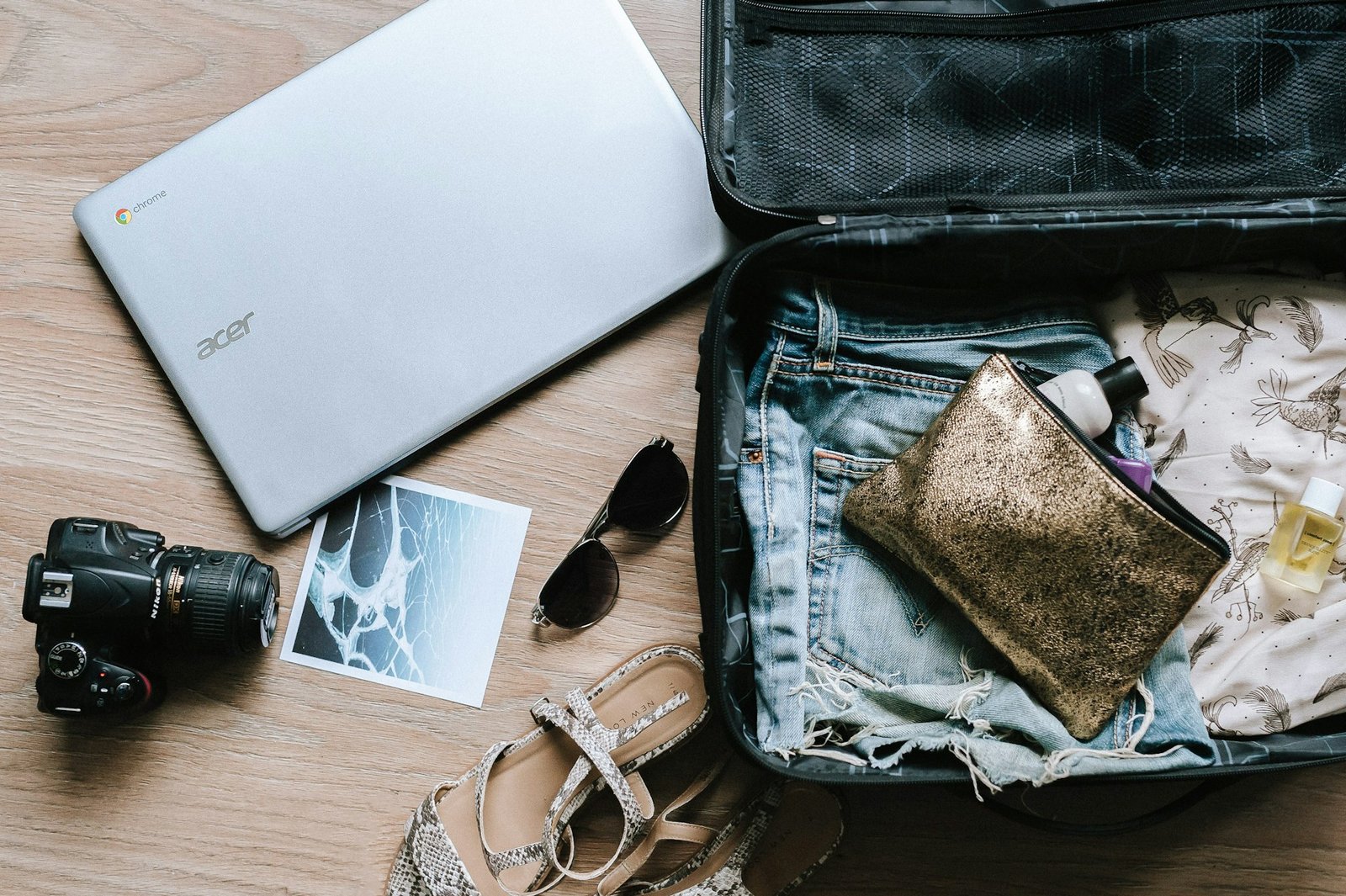
A quick note on cameras: I use my smartphone for most photos. If photography is your passion or a central part of your trip, bring a dedicated camera. For most travelers, a modern phone is more than sufficient.
Clothing
I keep my color palette simple—mostly blacks, grays, navies, and whites. When everything coordinates, I don’t have to think about whether my shirt matches my pants. It all works together.
| Item | Quantity | My Thoughts |
|---|---|---|
| Shirts (short sleeve) | 4–5 | I prefer merino wool or synthetic blends. They resist smells and dry quickly after washing |
| Shirt (long sleeve) | 1 | Handy for cooler evenings or slightly dressier moments |
| Bottoms (pants) | 1 pair | Jeans are tough but heavy. Travel-specific trousers are lighter and dry faster |
| Bottoms (shorts) | 1 pair | Essential for warm weather or beach destinations |
| Underwear | 5–7 | Enough to get me through a week between laundry sessions |
| Socks | 5–7 | I always bring a couple extra because I seem to lose them constantly |
| Swimwear | 1 | Even if I’m not planning beach time, you never know when a pool or hot spring will appear |
| Sandals | 1 pair | For showers, beaches, and casual walking |
| Walking shoes | 1 pair | These are my bulkiest item, so I wear them during travel |
| Evening shoes | Optional | Only for trips where I know I’ll need something nicer |
A word about materials: Merino wool has become my go-to for travel clothing. It doesn’t hold onto odors, handles both warm and cool weather well, and dries quickly after washing. I’ve slowly replaced most of my cotton with merino or synthetic options. Cotton is comfortable at home, but on the road it’s heavy, slow to dry, and tends to wrinkle.
Toiletries
I keep this category ruthlessly minimal. Solid products have been a huge improvement—they don’t spill, they take up less space, and they last much longer than liquids.
| Item | Notes |
|---|---|
| Toothbrush | Travel size or foldable |
| Toothpaste | Small tube |
| Deodorant | Solid stick—no liquid restrictions to worry about |
| Razor | Disposable or compact travel razor |
| Hair care | Shampoo bar or small container |
| Body care | Soap bar or small container |
| Quick-dry towel | Microfiber towel that packs small and dries fast |
If you’re flying with only a carry-on, airport security requires that all liquids be in containers no larger than 3.4 ounces (100 milliliters) and all fit inside one clear quart-sized bag. Solid products bypass these rules entirely.
Simple First Aid
I carry a small pouch with basics. Nothing elaborate—just enough to handle minor issues until I find a pharmacy.
| Item | Purpose |
|---|---|
| Adhesive bandages | For blisters and small cuts |
| Antiseptic wipes | To clean minor wounds |
| Pain relief | Ibuprofen or acetaminophen |
| Hand sanitizer | When soap and water aren’t available |
That’s it. For the vast majority of trips, this is plenty. Pharmacies exist almost everywhere.
Small Essentials
These items take up almost no space but have saved me more times than I can count.
| Item | Why I Never Leave Without It |
|---|---|
| Small lock | Essential for hostel lockers and sometimes hotel gym lockers |
| Mini flashlight | Reading in shared dorms without disturbing others, finding my way in the dark, unexpected power outages—it’s surprisingly useful |
| Resealable plastic bags | A few in different sizes. Great for keeping electronics dry, organizing small items, or carrying snacks |
| Water bottle | I fill it after security. Saves money and reduces plastic waste |
What Stays Home
Letting go of items is harder than choosing what to bring. But this is where the real magic happens.
Here’s what I’ve learned to leave behind:
- Extra footwear. Three pairs is my absolute limit. Two is even better.
- Dressy attire. Unless I have a specific event planned, I skip it. A clean, decent shirt is as formal as I get.
- Physical books. That’s what my e-reader is for.
- Large toiletries. Small containers or solid bars only.
- “What if” items. If I haven’t thought about it in 24 hours, I don’t need it.
- Multiple outer layers. One versatile jacket handles almost every situation.
Adjusting for Different Destinations
My packing changes depending on my destination or where I’m going. Here are some common variations:
Beach Getaway
- Swap pants for a second pair of shorts
- Add a lightweight wrap or sarong—it serves as towel, cover-up, and blanket
- Leave the nicer shoes at home
Cold Weather Trip
- Wear my heaviest coat and boots during travel
- Add thermal base layers
- Pack gloves, hat, and scarf
- Use compression bags for bulky sweaters
Work Trip
- Bring a blazer (wear it during travel)
- Pack two collared shirts
- Use a garment folder to prevent wrinkles
- One pair of professional shoes is sufficient
My Packing Routine
Here’s how I actually prepare for a trip:
1. Spread everything out. I put everything I’m considering on my bed. Seeing it all together makes overpacking obvious.
2. Cut ruthlessly. I go through each piece and ask myself whether I’ll genuinely use it. If I hesitate, it doesn’t come.
3. Organize with cubes. I sort everything into organizing cubes—tops, bottoms, undergarments, miscellaneous. This keeps my bag neat and makes unpacking instant.
4. Wear the heavy stuff. On travel day, I wear my heaviest shoes, my jacket, and any bulky layers. This frees up significant space in my bag.
5. Check the weight. Most airlines have carry-on weight limits. I aim for 7–9 kilograms for international trips. I weigh at home so there are no surprises at the airport.
Lessons I’ve Learned the Hard Way
I’ve made plenty of packing mistakes over the years. Here are the most common ones I see travelers make:
| Mistake | What Experience Taught Me |
|---|---|
| Too much footwear | Shoes are the heaviest, bulkiest items you carry. Three pairs maximum |
| All cotton everything | Cotton is comfortable but dries slowly. Technical fabrics are worth the switch |
| Overdoing toiletries | You can buy shampoo and toothpaste anywhere. Bring small amounts |
| No laundry plan | A sink stopper and small amount of detergent let you wash clothes anywhere. This means you can pack for a week instead of a month |
| Ignoring airline rules | Always check weight and size limits before you pack. They vary by airline |
| Bag too large | A smaller bag forces you to pack less. It’s the most effective trick I know |
Why I’ll Never Go Back to Traveling Heavy
After years of refining how I backpack, I’ve come to a simple realization: the things I carry matter far less than what I do when I arrive.
When I traveled with a massive bag, I spent so much mental energy managing it. Worrying about weight. Struggling through train stations. Waiting at baggage claim. The bag was a constant companion, and not in a good way.
Now, I barely think about what I’m carrying. My bag is small enough to take anywhere. I can change plans on a whim. Walking across a city without getting tired is the norm. And I never wait for luggage.
That freedom—the ability to move easily, adapt quickly, and focus on experiences instead of stuff—is worth more than any item I used to carry.
The Freedom of One Bag
Choosing the right backpack was the turning point for me. For years, I used whatever bag I had lying around—a hand-me-down duffel, a cheap suitcase, a hiking backpack that was never meant for airports. None of them worked well. When I finally invested in a proper travel backpack designed for carry-on travel, everything changed. The weight distribution was better. The organization made sense. Suddenly, moving through airports, train stations, and city streets felt effortless instead of exhausting. A well-designed backpack isn’t just a bag—it’s the foundation of traveling light.
What I’ve Learned Along the Way
If you’re new to traveling with just a carry-on backpack, give yourself grace. Your first trip with a smaller bag might feel uncomfortable. You might leave something behind that you wish you had. That’s okay. Every trip teaches you something new about what you actually need and what you can live without. After a few trips, packing becomes second nature. You’ll know exactly what fits in your backpack, how to arrange it, and how to move through the world without being weighed down. The confidence that comes from traveling with one small backpack is worth more than any extra item you could have packed.
Quick Reference Checklist
Use this before your next trip:
Bag
- Carry-on size
- Packing organizers
Clothing
- 4–5 short-sleeve shirts
- 1 long-sleeve shirt
- 1 pair pants
- 1 pair shorts
- 5–7 underwear
- 5–7 socks
- 1 swimsuit
- 1 pair walking shoes
- 1 pair sandals
Toiletries
- Toothbrush and toothpaste
- Deodorant
- Razor
- Shampoo (solid or small)
- Soap (solid or small)
- Quick-dry towel
Medical
- Bandages
- Pain reliever
- Hand sanitizer
Essentials
- Small lock
- Mini flashlight
- Resealable bags
- Water bottle
- Universal adapter
- Phone charger
- Power bank
Final Check
- Bag weighed (7–9 kg target)
- Bulky items planned for travel day
- “Just in case” items removed
This approach works for me. It might not be exactly right for you, and that’s perfectly fine. Packing is personal—your destination, your activities, your preferences all matter.
But the main thing I hope you take away is this: you almost certainly need less than you think. Travel light. Move freely. Enjoy the journey.
What’s in your bag? What strategies have you discovered for traveling light? Drop your thoughts in the comments—I’m always curious to learn from other travelers.